

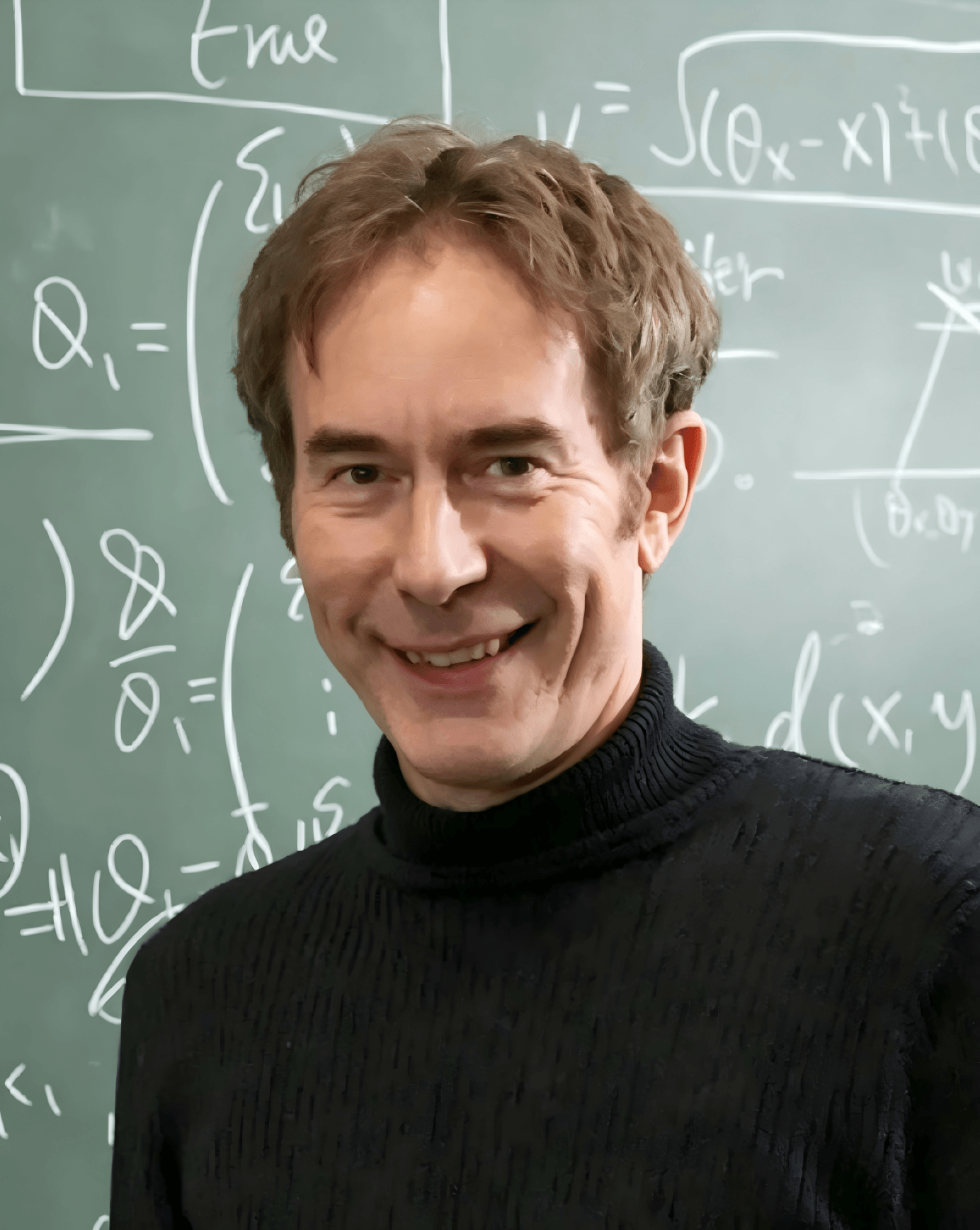
Detailed Biography
Professor Shipsey earned his PhD in experimental particle physics from the University of Edinburgh in 1986. After postdoctoral work at Syracuse University, he joined Purdue University, where he was appointed Julian Schwinger Distinguished Professor of Physics. Returning to the UK in 2013, he took up the Henry Moseley Centenary Chair at Oxford and was elected Head of the Department of Physics in 2018, serving two terms. He developed the specialist pixel camera critical to the discovery of the Higgs boson at CERN in 2012, pioneered the U.S. Department of Energy’s involvement in the Vera C. Rubin Observatory’s LSST camera, and made foundational contributions to CLEO, CMS, and ATLAS collaborations. He was thrice elected co-spokesperson of the CLEO experiment and served as CMS Collaboration Board chair. He received the Institute of Physics’s Chadwick Medal and Prize (2019) and was a Fellow of the American Physical Society, the AAAS, and the Institute of Physics. Despite profound hearing loss from 1989, he became an early adopter of cochlear implant technology and gave inspiring public lectures on the subject. He is remembered as a transformative leader, mentor, and innovator whose legacy continues across particle physics and astronomy.

The International Academy of Eurasian Sciences is an international scientific organisation established in January 1994 and registered in the United Nations as a non-governmental organisation of UNESCO.
International Eurasian Academy of Sciences UK Centre London, WC2A 2AE United Kingdom
info@ieas.org.uk secretariat@ieas.org.uk fellowship@ieas.org.uk